

Lot n° 24
Estimation :
15000 - 20000
EUR
Result without fees
Result
: 23 000EUR
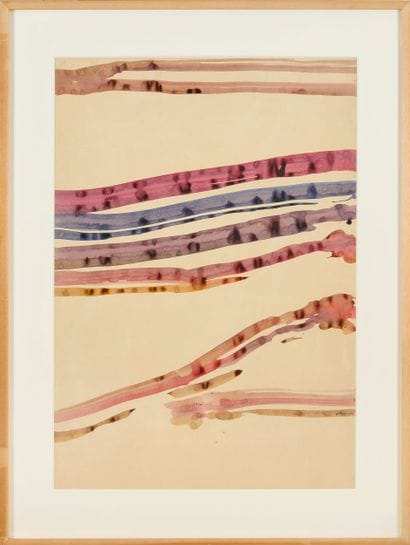
José Antonio SISTIAGA (1932–2023) - Lot 24
José Antonio SISTIAGA (1932–2023)
Lectura en el tiempo, December 16, 1962
Inks and ink wash on paper, signed and dated lower right.
98 x 68 cm
Provenance: Artist’s collection, by descent.
Exhibitions:
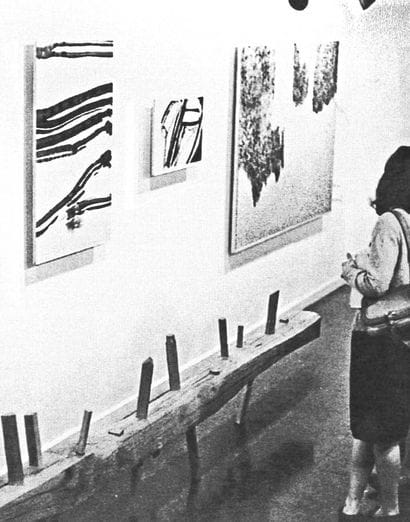
- Gaur de la Escuela Vasca, Barandiarán Gallery, San Sebastián, April 28–May 28, 1966, no. 19.
- Grupo Emen - Grupo Gaur de la Escuela Vasca. Museum of Fine Arts, Bilbao, August 21–September 12, 1966.
- Escuela Vasca de Arte Contemporáneo: Grupos Oraín, Gaur, Emen, Provincial Museum of Álava, Vitoria-Gasteiz, October 29–November 13, 1966.
- Constelación Gaur: An Avant-Garde Tapestry of Basque Art, Caja Vital Kutxa Foundation, Vitoria-Gasteiz, June 10–July 4, 2004.
Bibliography:
- F. GOLVANO & J. ARRIAGA, Constelación Gaur: A Vanguardist Tapestry of Basque Art, Vitoria-Gasteiz, Caja Vital Kutxa Foundation, 2004, reproduced on pp. 41, 45, and 62.
- J. ALVAREZ (ed.), Amable Arias, The Theorem of Anamnesis - The Contemplative Barrier, Eolas, León, 2017, reproduced on p. 58.
- J. BATTESTI (ed.), Gaur, 1966 - Basque Art in Resistance, Saint-Pée-sur-Nivelle, Kilika, 2018, reproduced on pp. 4, 13, and 71.
- J.-P. HUERCANOS, Grupo GAUR. Art and Collective Construction 1965–1967, Alzuza, Jorge Oteiza Foundation, 2020, reproduced on pp. 86–87 and 99.
- J.-M. BOUHOURS, José Antonio Sistiaga: Reflections in an Imagined Garden, San Sebastián, Kulturena, 2011, reproduced on p. 41.
A certificate of authenticity from the Art Sistiaga estate may be provided to the buyer.
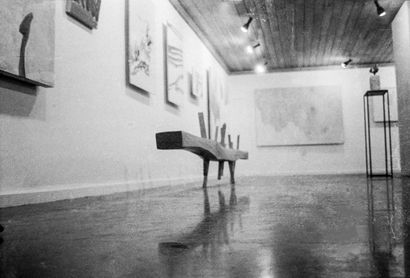
One of the four works by the artist that were exhibited at the 1966 Gaur exhibition in front of Remigio Mendiburu’s famous Txalaparta.
As the main initiator of the Gaur movement alongside his friend Amable Arias, José Antonio Sistiaga perfectly illustrates the trajectory of post-war artists.
Feeling stifled in Franco’s Spain, which suppressed Basque identity, the young Sistiaga moved to Paris between 1954 and 1961. There he observed the dynamism of the avant-garde and became fascinated by Abstract Expressionism.
Upon returning to his homeland, he settled for a time in the Balearic Islands, where he fully embraced color.
José Antonio Sistiaga is one of those gestural painters. From gesture to the apprehension of movement, this became the recurring theme of his work. In 1970, he culminated in a groundbreaking kinetic experiment: the creation of the only abstract feature-length film in the history of cinema, painted directly onto 35mm film. Copies of the films painted by Sistiaga are part of the collections of the Centre Pompidou, the Cinémathèque Française, the Reina Sofia in Madrid, and the Harvard Film Archive.
From Indian ink (lot 23) to colorful gestures (lot 24), and including the rare series of stamps (lot 25), the repetition of ever-changing gestures allowed Sistiaga to transcribe movement into his painting. The artist’s latest series of paintings, *Vitesse-Lumière-Couleur*, is yet another symbol of this.
José Antonio Sistiaga is a complete, total artist. As a teacher and facilitator, he organizes free-expression workshops for children. As a creator of happenings, an intellectual, and a poet, he brings together all the arts and fosters dialogue among them. He accompanies his exhibitions with avant-garde musical selections and chose to feature works by Boulez, Messiaen, and Schönberg during the 1966 exhibition at the Barandiaran Gallery.
Based in Ciboure for much of his life, until his death, he was the one of the eight Basque artists who maintained the closest ties with France.
My orders
Sale information
Sales conditions
Return to catalogue